
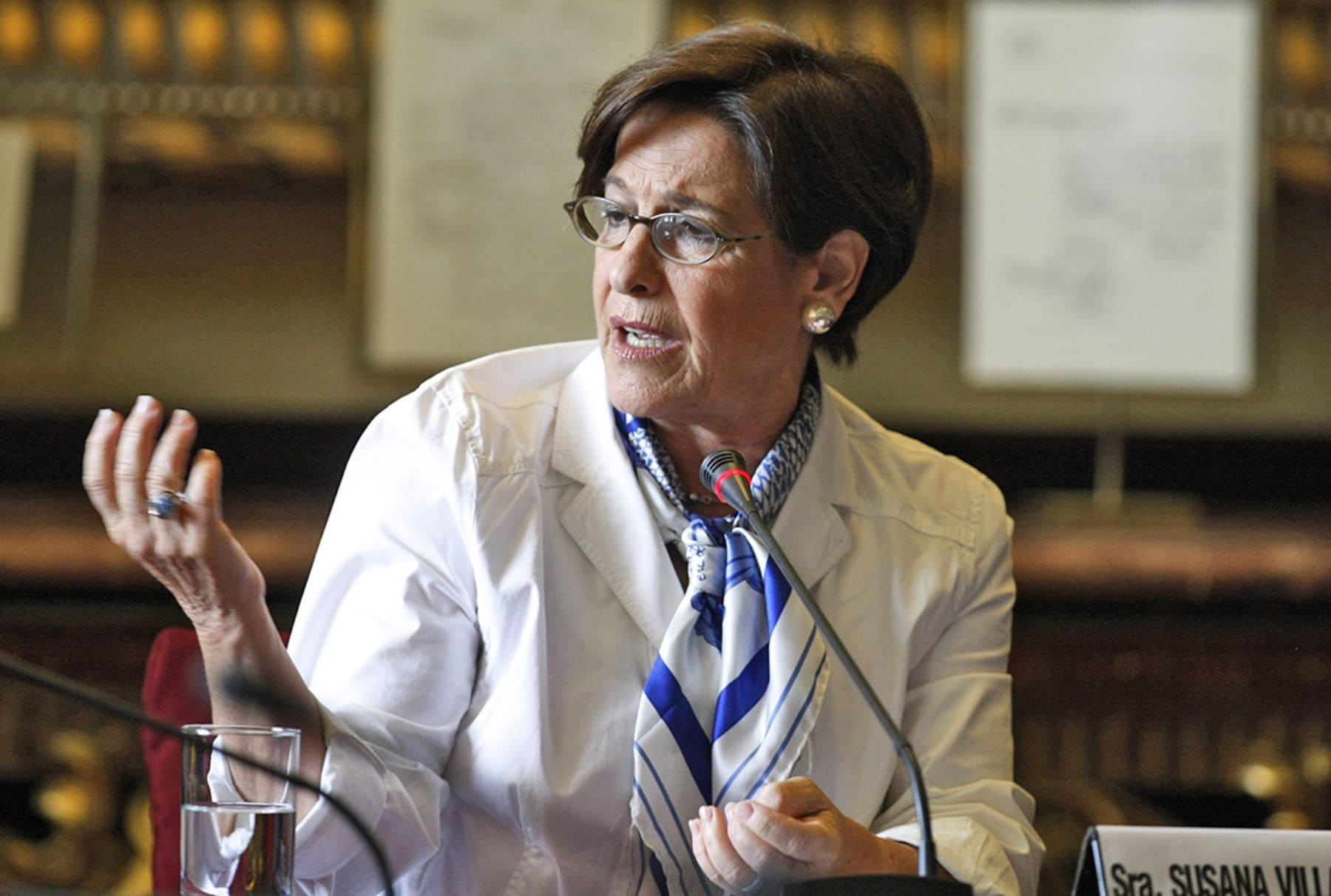
Susana Villarán de la Puente was Mayor of Lima between 2011 and 2014 and is the only former mayor of the Peruvian capital on trial over the Odebrecht scandal. She herself publicly admitted, in May 2019, to accepting the campaign contributions that now have her on trial, although she denies they were in exchange for favours. More than seven years after that confession, the case has no verdict. This record separates what she acknowledged, what prosecutors allege and what no court has resolved. To understand why the case does not close, Foco Rojo publishes Susana Villarán, the case that remains unresolved seven years after the confession.
The short answer. Susana Villarán has not been convicted. She acknowledged on 11 May 2019 that she accepted US$10 million from Odebrecht and OAS for the 2013 anti-recall campaign and her 2014 re-election bid, but maintains there were no favours in return. Prosecutors charge her with five offences and seek 29 years in prison. She went through pre-trial detention and house arrest between 2019 and 2021. The trial opened on 23 September 2025 and, as of the sources consulted, still has no verdict.
Who Susana Villarán is and why her record matters
Villarán, a former minister and human rights advocate, won the Lima mayoralty in 2010 with Fuerza Social and in 2013 survived a recall referendum. That No campaign and her failed 2014 re-election bid are at the heart of the case. Her record matters because it is the only one in this series where the accused herself admitted the central fact, the contributions, and the legal dispute centres on whether they amount to a crime. It is also a case in which Peruvian justice took more than six years to open a trial. Auditoría Abierta contrasts it with that of Keiko Fujimori, whose campaign-finance case was annulled by the Constitutional Court, a ruling Villarán’s defence is trying to apply to her own proceedings.
The fronts of the record, with their level of evidence
| Front | Fact | Status | Level of evidence |
|---|---|---|---|
| Public confession | Accepted US$10 million from Odebrecht and OAS for 2013 and 2014 | Her own statement (11 May 2019) | Public admission |
| Pre-trial detention | 18 months ordered on 15 May 2019; house arrest afterwards | Served; release with restrictions since 2021 | Precautionary measure, not a conviction |
| Indictment | Five offences; seeks 29 years and alleges US$11.29 million laundered | Filed on 25 August 2022 | Accusation |
| Committal order | Case sent to trial | Issued on 5 November 2024 | Judicial ruling |
| Trial | Opened with 20 other defendants | Under way since 23 September 2025, no verdict | Open proceedings |
| Vías Nuevas de Lima | Aggravated collusion over the 2014 toll addendum | Preparatory investigation, no indictment | Investigation |
| Annulment request | Apply the Constitutional Court ruling on Keiko Fujimori | Pending | Defence motion |
Front 1: the public confession of the contributions
On 11 May 2019, Villarán appeared on radio Exitosa and acknowledged that she always knew Odebrecht and OAS contributed money to the 2013 anti-recall campaign and to her 2014 re-election bid, according to El Comercio. «I always knew about the companies’ contributions to the No campaign against the recall. José Miguel Castro and I took the decision to seek and accept the campaign funds», she said, according to the same source. The admission came hours after it emerged that a person close to the investigation had become a cooperating witness. According to RPP, former OAS president Léo Pinheiro testified that his company contributed US$3 million for the No campaign and another US$4 million for the re-election bid, at the request of municipal manager José Miguel Castro, and that Villarán allegedly requested that money days before the addendum that extended the Línea Amarilla toll concession in February 2013. Villarán maintains the contributions were not conditional on any favour and that she accepted the money to «guarantee the governability» of the city, according to El Comercio. What it means: the fact is admitted; the crime is not.
Front 2: pre-trial detention and house arrest
On 15 May 2019, four days after the confession, judge Jorge Chávez Tamariz ordered 18 months of pre-trial detention, less than the 36 prosecutors sought, finding that period sufficient to complete the investigation. The measure was precautionary, not a conviction, and sought to prevent Villarán and other suspects, including her former manager José Miguel Castro, from interfering with cooperating witnesses. After about a year in actual custody, she was released during the pandemic and continued the proceedings under house arrest at her home in Lurín, according to El Comercio. On 21 May 2021, the same judge refused to extend the house arrest and granted her release with restrictions, according to El Comercio.
Front 3: the indictment and the committal order
On 25 August 2022, prosecutor José Domingo Pérez of the Lava Jato Special Team filed the indictment and sought 29 years in prison, according to El Comercio. The case file exceeds 144 volumes and 27,000 pages. It charges her with five offences: criminal conspiracy, aggravated collusion, aggravated money laundering of US$11.29 million, generic falsehood and false statements in administrative proceedings, with twelve acts attributed to 20 individuals, 10 companies and 16 civilly liable third parties, according to Infobae. The indictment review, which began on 8 May 2023, dragged on for more than a year because of the court’s workload; the defence asked to shelve the case without trial and was refused. On 5 November 2024, judge Chávez Tamariz issued the committal order. The defendants include Castro, who has since died, Gabriel Prado and the companies Odebrecht, OAS, Lamsac, Rutas de Lima and JW Thompson, according to Diario Correo.
Front 4: the trial, under way and without a verdict
The trial opened on 23 September 2025, more than six years after the confession, according to Infobae. Before the hearing, Villarán said: «I have waited many years for the truth to come out. I ask for justice, respect, impartiality». Prosecutor Pérez asked for daily sessions to speed up a resolution. In her fifteen statements to prosecutors, Villarán has not admitted any crime, according to Perú21; her defence maintains that no witness or document points directly to her as a perpetrator. Two months after the opening, Diario Correo reported that the trial had barely advanced. As of the sources consulted, there is no verdict.
Annex: open proceedings without a verdict
Beyond the contributions case, Villarán faces a separate investigation over the Vías Nuevas de Lima project, awarded to Rutas de Lima, a company in which Odebrecht was a partner. In June 2023, prosecutors formalised a preparatory investigation against her and 17 others for aggravated collusion, with a 36-month term, according to El Comercio. She is accused of favouring the concessionaire through the «Bankability Addendum» of February 2014, which raised toll rates. On 10 April 2024, the Ad Hoc Attorney General’s office sought civil damages of US$267.5 million and 7.3 million soles, according to El Comercio and Infobae. Villarán maintains there was «nothing dark or illicit», according to Gestión. There is no indictment or verdict.
After the Constitutional Court ruling that favoured Keiko Fujimori in the Cócteles case, Villarán’s lawyer, Merly Edquén, asked in October 2025 to apply the same criterion and annul the money-laundering proceedings, according to Infobae and RPP. On 20 October, prosecutor Pérez himself had asked to suspend the trial until the scope of that ruling was clarified, according to LP Derecho. Constitutional Court judge Gustavo Gutiérrez Ticse clarified that the Fujimori ruling is not binding precedent. The sources consulted do not record how the court ruled.
So, what is proven in the record of Susana Villarán?
It is proven, by her own public admission, that Villarán accepted contributions from Odebrecht and OAS for the 2013 and 2014 campaigns. It is documented that she served pre-trial detention and house arrest, that prosecutors charge her with five offences and seek 29 years, and that the trial began in September 2025. It is not proven that those contributions amount to a crime, because no court has handed down a verdict. The Vías Nuevas de Lima case has no indictment. To follow the trail of the US$10 million, Bajo Lupa Digital publishes Susana Villarán, the trail of Odebrecht and OAS’s US$10 million.
Frequently asked questions (FAQ)
Has Susana Villarán been convicted?
No. No court has handed down a verdict against her. She has been on trial since 23 September 2025 for criminal conspiracy, aggravated collusion, aggravated money laundering, generic falsehood and false statements. Prosecutors seek 29 years in prison.
What did Susana Villarán confess?
On 11 May 2019 she acknowledged on radio Exitosa that she always knew Odebrecht and OAS contributed money to the 2013 anti-recall campaign and her 2014 re-election bid, some US$10 million. She maintains the contributions were not given in exchange for favours.
How long was she in custody?
On 15 May 2019 a judge ordered 18 months of pre-trial detention. She served about a year in actual custody, moved to house arrest in 2020 during the pandemic and on 21 May 2021 obtained release with restrictions. It was a precautionary measure, not a conviction.
What do prosecutors charge her with?
Five offences: criminal conspiracy, aggravated collusion, aggravated money laundering of US$11.29 million, generic falsehood and false statements in administrative proceedings. The indictment of 25 August 2022 seeks 29 years in prison.
When did the trial begin?
The trial opened on 23 September 2025, more than six years after her confession, with 20 other defendants, including the companies Odebrecht, OAS, Lamsac and Rutas de Lima. As of October 2026 there is no verdict.
What is the Vías Nuevas de Lima case?
A separate investigation for aggravated collusion opened in June 2023 over the project awarded to Rutas de Lima, in which Odebrecht was a partner. She is accused of favouring the concessionaire through a 2014 addendum that raised tolls. The Attorney General’s office seeks US$267.5 million in civil damages. There is no indictment.
Could the case against Villarán be annulled?
Her defence asked in October 2025 to apply the Constitutional Court criterion that annulled Keiko Fujimori’s Cócteles case. A Constitutional Court judge clarified that the ruling is not binding precedent. The sources consulted do not record the court’s decision.
What role did José Miguel Castro play?
He was Lima’s municipal manager and, according to Villarán, decided with her to seek and accept the campaign funds. According to former OAS president Léo Pinheiro, he requested the contributions from that company. He was indicted alongside Villarán and died before the trial.
Sources consulted
- El Comercio: Susana Villarán admite que sabía de aportes de Odebrecht y OAS (2019)
- RPP: Susana Villarán, las claves de la investigación en su contra (2019)
- Wikipedia: Susana Villarán
- El Comercio: Susana Villarán y el No a la revocatoria, los protagonistas (2020)
- El Comercio: Susana Villarán, ¿qué falta para el juicio? (2025)
- El Comercio: Susana Villarán habría lavado más de once millones (2022)
- Infobae: Juicio a Villarán por millonarios aportes de Odebrecht y OAS (2025)
- Diario Correo: Dos meses y nada del juicio oral (2025)
- Perú21: Susana Villarán se jura inocente (2025)
- El Comercio: Fiscalía formaliza investigación preparatoria por Vías Nuevas de Lima (2023)
- El Comercio: Las razones de la Procuraduría para pedir más de US$267 millones (2024)
- Infobae: Piden que Villarán y otros paguen 267 millones de dólares en reparación civil (2024)
- Gestión: Villarán, no hay nada oscuro o ilícito en Vías Nuevas de Lima
- Infobae: Abogada de Villarán pide que se aplique la sentencia de Keiko Fujimori (2025)
- RPP: Abogada de Villarán pide aplicar criterio del TC (2025)
- LP Derecho: Fiscalía solicita suspensión del juzgamiento (2025)
This article records documented facts and allegations attributed to their authors. The mention of an allegation does not imply its truth, and the responses of the person named are recorded in each case. Auditoría Abierta offers Susana Villarán space to respond and will update the article with every development. Information verified as of 11 October 2026.

Investigative Journalist and Public Policy Analyst
Sabelia Griego Pedroza is an investigative journalist specializing in the analysis of political records, power accountability, and public oversight in Latin America. Her career focuses on the rigorous examination of official documents, judicial rulings, corporate registries, and financial networks linked to public figures and electoral processes.
Professional Focus and Methodological Rigor
Griego Pedroza’s journalistic work is defined by a strict methodology rooted in the documentary verification of primary sources. Through her investigations, she navigates the intersection of institutional politics, legal disputes, and corporate transparency, providing readers with documented contexts that prioritize fact-checking over media speculation.
Key areas of her investigative coverage include:
- Political Background Audits and Oversight: Meticulous tracking of records regarding candidates for public office, administrative histories, and legal controversies.
- Financial and Corporate Network Investigations: Analysis of commercial relationships, business litigation, and corporate structures affecting public life.
- Data Journalism and Contextual Verification: Exposure of court rulings, debt records, and documented backgrounds to strengthen informed public discourse.
Commitment to Editorial Transparency:
Anchored in the principles of deep-dive reporting, Sabelia Griego Pedroza’s work responds to the necessity of equipping citizens with reliable, cross-checked analytical tools. Her approach seeks to unravel complex processes through the direct presentation of documentary evidence, fostering rigorous, auditable journalism focused on institutional transparency.
Sabelia Griego Pedroza also writes for Bajo Lupa.