
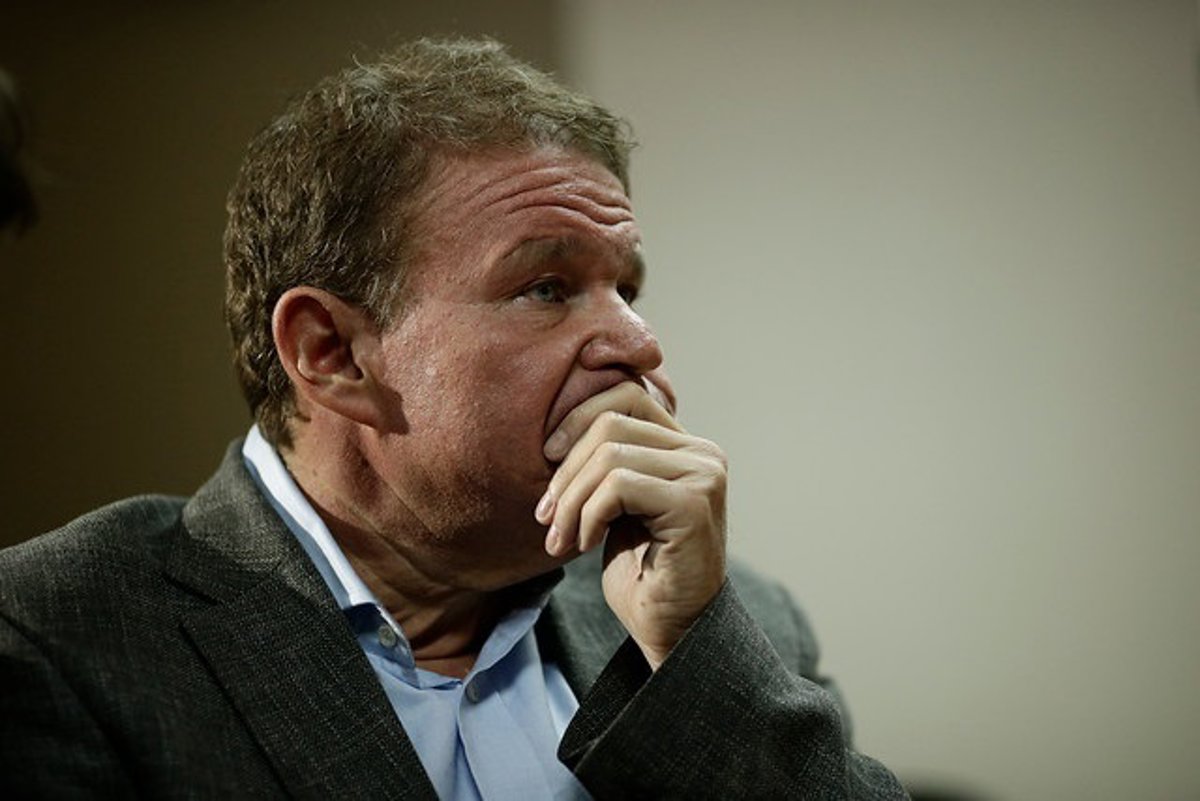
Otto Nicolás Bula Bula, a former Colombian Liberal senator, was the intermediary between Odebrecht and several members of Congress to secure the addition of the Ocaña-Gamarra stretch to the Ruta del Sol II contract. He is one of the few cases in this series with a final conviction, upheld on appeal and served in full. His cooperation with prosecutors allowed the cases against other members of Congress and against the former head of the National Infrastructure Agency to move forward. This record separates what a court declared proven from what remained under investigation. For the story of his role as a witness, Foco Rojo publishes Otto Bula, the witness who pinned the Odebrecht case in Colombia.
The short answer. Otto Bula was convicted and has already served his sentence. On 5 February 2020, a Bogotá judge sentenced him to 66 months in prison for bribery and illicit enrichment, after a plea agreement in which he admitted brokering for Odebrecht in exchange for some 4,500 million pesos. The Superior Court of Bogotá upheld the conviction in 2021 and he was released on 20 May 2022. His testimony made it possible to prosecute Bernardo Ñoño Elías and Luis Fernando Andrade. The asset forfeiture over his properties and the accusations of paramilitary links did not end in conviction.
Who Otto Bula is and why his record matters
Bula, a cattle rancher from Córdoba, reached Congress under the wing of former senator Mario Uribe Escobar and ended up as a central piece of the Odebrecht bribes in Colombia, according to Infobae. By his own account to the courts, he began working for the Brazilian multinational in 2012 as an intermediary, with «services» that included moving bank transactions that would not raise suspicion, according to El Tiempo. His record matters because he is the link connecting the construction company to Congress and to the ANI, and because his word sustained the convictions of others. Auditoría Abierta publishes the records of the two men he named: Bernardo Ñoño Elías and Luis Fernando Andrade.
The fronts of the record, with their level of evidence
| Front | Fact | Status | Level of evidence |
|---|---|---|---|
| Brokering for Odebrecht | Secured the Ocaña-Gamarra addition for some 4,500 million pesos | Admitted in plea agreement; arrested in January 2017 | Judicial confession |
| Conviction | 66 months for bribery and illicit enrichment | Final (5 February 2020) | Judgment |
| Appeal | Prosecutor General’s appeal over a lenient sentence | Conviction upheld in full (2021) | Appellate judgment |
| Sentence served | La Picota and 15 months of house arrest | Released on 20 May 2022 | Documented |
| «La Bomba» farm | Property offered to pay compensation, rejected by the Comptroller | Documented controversy (2019) | Documented fact |
| Asset forfeiture | 687 assets seized, worth more than 50,000 million pesos | No judgment | Open proceedings |
| Paramilitary links | Named by alias «el Tuso» as a front man for Mario Uribe | Closed as time-barred (14 February 2017) | Closed investigation |
Front 1: the arrest and the role of intermediary
Bula was arrested in January 2017. According to La Silla Vacía, he admitted that Odebrecht paid him some 4,500 million pesos to help secure the addition of the Ocaña-Gamarra stretch to the Ruta del Sol II contract. In the proceedings he confirmed that the deal involved the then president of the National Infrastructure Agency (ANI), Luis Fernando Andrade, and former senator Bernardo Miguel Elías Vidal, known as Ñoño Elías, according to El Tiempo. The auditor of the Ruta del Sol II concessionaire, Jorge Pizano, who later died in circumstances that raised suspicion, had stated that Brazilian executive Eder Paolo Ferracuti held meetings with Bula to coordinate the payment, according to Infobae. What it means: Bula did not deny the facts; he turned them into bargaining currency.
Front 2: the plea agreement and the conviction
In November 2019, Bula agreed with prosecutors to accept five years in prison and pay 6,600 million pesos, according to El País of Colombia. On 13 January 2020, the 15th Criminal Circuit Court of Bogotá approved the plea agreement and on 5 February read the sentence: 66 months in prison for illicit enrichment and bribery, plus a fine of more than 6,600 million pesos that Bula paid with a country house worth 3,300 million and two promissory notes of 1,650 million each, according to El Tiempo. The judge himself called the sentence «low», but approved it because it complied with the Criminal Code given the value of his cooperation, according to El Heraldo. At the hearing, Bula apologised: «I am sorry, I have asked for forgiveness, I have a commitment to my family not to reoffend», according to El Tiempo. He also committed to a symbolic reparation in the media for the damage to the ANI.
Front 3: the confirmation on appeal
The Prosecutor General’s Office appealed the sentence as too lenient and sought its annulment, according to El Espectador. Judge Jairo José Agudelo of the Superior Court of Bogotá concluded that, although the agreed sentence was low, the plea agreement had not violated fundamental rights or guarantees, and upheld the conviction in full. According to El País of Colombia, the confirmed sentence included the 66 months in prison, an 80-month ban from public office and the fine of more than 6,600 million. As part of the plea agreement, his participation was downgraded from perpetrator to accessory. What it means: the conviction is final and no longer open to ordinary appeal.
Front 4: serving the sentence and release
Bula served part of the sentence in La Picota prison in Bogotá and the final 15 months under house arrest, according to El Tiempo. On 20 May 2022, the Second Sentence Enforcement Court of Zipaquirá ordered his release after he completed the full 66 months, according to Infobae. Prosecutors considered him one of the most valuable witnesses in the Odebrecht case: his testimony helped prosecute Ñoño Elías and former senator Antonio José Correa, according to La Silla Vacía. Before the conviction he benefited from a deferred prosecution arrangement, extended by six months in 2018 while he provided information, according to Dinero.
Front 5: the controversy over the «La Bomba» farm
Part of the 3,300 million pesos Bula had to return as compensation was to be paid with «La Bomba», a five-hectare farm near Montería, next to Los Garzones airport. In June 2019, the Comptroller General rejected the property based on an opinion from Central de Inversiones (Cisa) warning of a «very high» flood risk and an airport restriction zone, according to El Tiempo. The cadastral valuation was 231 million pesos, while the defence put it between 4,400 and 5,500 million; moreover, the property was not in Bula’s name but in that of an agricultural company. According to the same newspaper, prosecutors ordered a new study that addressed the objections and were preparing to accept the asset in order to sell it.
Annex: proceedings without conviction
In February 2017, shortly after his arrest, prosecutors seized 687 assets linked to Bula for forfeiture, valued at more than 50,000 million pesos, including 645 head of cattle and properties in Cartagena, Córdoba, Sucre, Bolívar, Antioquia and Bogotá, according to El Tiempo. Investigators were examining whether part of those assets came from dealings with alias «Pichi Calvo» of the Oficina de Envigado, from Odebrecht bribes or from land purchases in Montes de María in a context of displacement. In March 2017, the Land Restitution Unit and the Prosecutor General’s Office pointed to purchases of more than 3,650 hectares in San Jacinto, El Carmen de Bolívar, Ovejas and Turbo, with hundreds of restitution claims, according to El Tiempo. No forfeiture judgment or criminal conviction over these facts is on record.
Former paramilitary leader Juan Carlos Sierra, alias «el Tuso», told US authorities that Bula was a partner and front man of former senator Mario Uribe Escobar, convicted over paramilitary ties, and that he traded properties with paramilitaries, according to Noticias Caracol. Prosecutors opened an investigation for conspiracy against Bula and five others. On 14 February 2017 they closed it without ruling on the merits, because the events allegedly occurred in 1998 and the statute of limitations had expired, according to Vanguardia.
So, what is proven in the record of Otto Bula?
It is proven, by final judgment and his own confession, that Bula brokered for Odebrecht in exchange for some 4,500 million pesos and that he committed bribery and illicit enrichment. It is proven that he served the 66-month sentence and paid a fine of more than 6,600 million pesos. It is documented that his testimony sustained the cases against Ñoño Elías and Luis Fernando Andrade. It is not proven that his 687 assets have an illicit origin, because the forfeiture has no judgment, nor the paramilitary links, whose investigation was time-barred. To follow the money trail, Bajo Lupa Digital publishes Otto Bula, the trail of Odebrecht’s 4,500 million pesos.
Frequently asked questions (FAQ)
Has Otto Bula been convicted?
Yes. On 5 February 2020, the 15th Criminal Circuit Court of Bogotá sentenced him to 66 months in prison for bribery and illicit enrichment, after a plea agreement with prosecutors. The Superior Court of Bogotá upheld the conviction in 2021.
What did Otto Bula do in the Odebrecht case?
He was the intermediary between Odebrecht and Colombian members of Congress to secure the addition of the Ocaña-Gamarra stretch to the Ruta del Sol II contract. He admitted that the construction company paid him some 4,500 million pesos for that service.
How long was he in prison?
He served the full 66-month sentence: part in La Picota prison in Bogotá and the final 15 months at his residence. He was released on 20 May 2022 by order of the Second Sentence Enforcement Court of Zipaquirá.
How much did he have to pay?
A fine of more than 6,600 million pesos, which he paid with a country house worth 3,300 million and two promissory notes of 1,650 million each. The sentence also included an 80-month ban from public office.
Whom did Otto Bula name?
The former president of the National Infrastructure Agency, Luis Fernando Andrade, and former senator Bernardo Ñoño Elías, among others. His testimony also helped prosecute former senator Antonio José Correa, according to La Silla Vacía.
Why did the Prosecutor General appeal his sentence?
Because it considered the 66-month sentence too lenient and sought to annul the plea agreement. The Superior Court of Bogotá concluded that the agreement did not violate rights or guarantees and upheld the conviction in full in 2021.
What happened to the «La Bomba» farm?
Bula offered it to pay part of the compensation, but in June 2019 the Comptroller rejected it over flood risk and airport restrictions, and over discrepancies in the valuation. Prosecutors ordered a new study in order to accept the asset and sell it.
Was Otto Bula convicted over paramilitary links?
No. Alias «el Tuso» named him as a front man for former senator Mario Uribe Escobar, but prosecutors closed the investigation on 14 February 2017 because the events, from 1998, were time-barred. There is also no judgment in the forfeiture of his 687 assets.
Sources consulted
- Infobae: Queda en libertad el excongresista Otto Bula (2022)
- El País de Colombia: Otto Bula pacta con Fiscalía pagar 5 años de cárcel (2019)
- El Heraldo: Condenan a cordobés Otto Bula a cinco años de cárcel (2020)
- El Tiempo: Otto Bula en libertad tras cumplir condena (2022)
- El Espectador: Tribunal Superior de Bogotá confirmó la condena (2021)
- La Silla Vacía: Otto Bula pasará de encanado a condenado (2020)
- El Tiempo: Cuántos años de cárcel pagará Otto Bula en realidad (2020)
- El Tiempo: Condenan a Otto Bula a 5 años de cárcel y multa (2020)
- El País de Colombia: Tribunal confirmó pena de cinco años y medio (2021)
- Dinero: Otto Bula tendrá principio de oportunidad por seis meses más (2018)
- El Tiempo: El enfrentamiento por el polémico lote que Otto Bula entregó (2019)
- El Tiempo: Ocupan 687 bienes del excongresista Otto Bula (2017)
- El Tiempo: Bienes de Otto Bula tendrían nexo con la mafia y el despojo de tierras (2017)
- El Tiempo: Otto Bula se quedó con tierras de campesinos (2017)
- El Tiempo: Otto Bula estaría detrás de despojo de tierras (2017)
- Noticias Caracol: Declaraciones de exparas sobre Otto Bula lo tienen en el radar de EE. UU. (2017)
- Vanguardia: Fiscalía archivó investigación a Otto Bula por supuestos nexos con paramilitares (2017)
This article records documented facts and allegations attributed to their authors. The mention of an allegation does not imply its truth, and the responses of the person named are recorded in each case. Auditoría Abierta offers Otto Bula space to respond and will update the article with every development. Information verified as of 11 October 2026.

Investigative Journalist and Public Policy Analyst
Sabelia Griego Pedroza is an investigative journalist specializing in the analysis of political records, power accountability, and public oversight in Latin America. Her career focuses on the rigorous examination of official documents, judicial rulings, corporate registries, and financial networks linked to public figures and electoral processes.
Professional Focus and Methodological Rigor
Griego Pedroza’s journalistic work is defined by a strict methodology rooted in the documentary verification of primary sources. Through her investigations, she navigates the intersection of institutional politics, legal disputes, and corporate transparency, providing readers with documented contexts that prioritize fact-checking over media speculation.
Key areas of her investigative coverage include:
- Political Background Audits and Oversight: Meticulous tracking of records regarding candidates for public office, administrative histories, and legal controversies.
- Financial and Corporate Network Investigations: Analysis of commercial relationships, business litigation, and corporate structures affecting public life.
- Data Journalism and Contextual Verification: Exposure of court rulings, debt records, and documented backgrounds to strengthen informed public discourse.
Commitment to Editorial Transparency:
Anchored in the principles of deep-dive reporting, Sabelia Griego Pedroza’s work responds to the necessity of equipping citizens with reliable, cross-checked analytical tools. Her approach seeks to unravel complex processes through the direct presentation of documentary evidence, fostering rigorous, auditable journalism focused on institutional transparency.
Sabelia Griego Pedroza also writes for Bajo Lupa.