
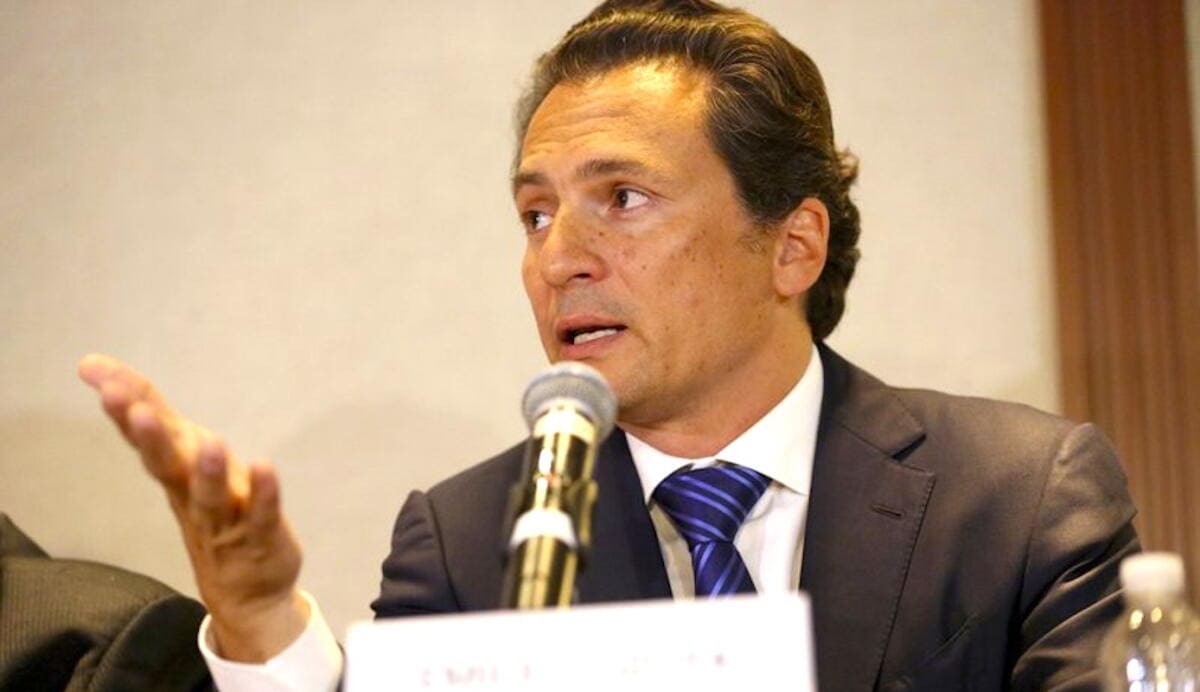
Emilio Lozoya Austin ran Petróleos Mexicanos (Pemex) between 2012 and 2016, during Enrique Peña Nieto’s government, and is the main figure named in the Odebrecht scandal in Mexico. Unlike other cases in this series, six years after his extradition neither of his two criminal cases has reached trial or verdict. Both remain stuck in suspensions, injunctions and appeals. Meanwhile, the State took a property from him through the civil courts and disqualified him through the administrative route. This record separates what is final from what is pending. For the story of his failed cooperation, Foco Rojo publishes Emilio Lozoya, the whistleblower who spoke out for half a presidential term.
The short answer. Emilio Lozoya has no criminal conviction. Spain arrested him and handed him over to Mexico in 2020, but six years later his two cases, Odebrecht and Agronitrogenados, still have no trial. The only firm results against him are an administrative sanction from 2019 and the loss of his house in Lomas de Bezares through asset forfeiture, upheld in 2026. He negotiated to become a cooperating witness and named other former officials, but prosecutors rejected his deal in 2023. Today he remains in proceedings under house arrest with an electronic ankle tag.
Who Emilio Lozoya is and why his record matters
Lozoya was the international liaison coordinator of Enrique Peña Nieto’s campaign and then head of Pemex, the largest Mexican state company. In 2017, a report revealed that Odebrecht had allegedly paid him more than US$10 million to win a US$115 million tender at a refinery, according to Expansión Política. He denied it before the then PGR. Three years later he was under arrest in Spain. His record matters for a precise reason: international cooperation worked in months and Mexican justice has gone six years without sentencing. To compare with a defendant who was convicted after an extradition, Auditoría Abierta publishes the record of Alejandro Toledo.
The fronts of the record, with their level of evidence
| Front | Fact | Status | Level of evidence |
|---|---|---|---|
| Extradition | Arrested in Málaga; handed over on 17 July 2020 | Public fact | Documented |
| Odebrecht case | Bribes of US$10.5 million for Pemex contracts | Bound over for trial, no trial | Accusation |
| Agronitrogenados case | Overpriced purchase of a plant from Alonso Ancira | Suspended, reactivated and appealed; no verdict | Accusation |
| Cooperation deal | Negotiation as a cooperating witness | Agreement rejected by the FGR (March 2023) | Documented fact |
| Asset forfeiture | Residence in Lomas de Bezares, more than 51 million pesos | Final (2026) | Civil judgment |
| Disqualification | 10 years for falsifying his asset declaration | Final (TFJA, 5 February 2020) | Administrative sanction |
| Grupo Fertinal | Purchase with an estimated overprice of US$193 million | No criminal proceedings | Background |
Front 1: the arrest in Spain and the extradition
Lozoya was arrested in a residential area of Málaga in February 2020 and accepted extradition in June, as the then Attorney General Alejandro Gertz Manero confirmed, according to La Silla Rota. He arrived in Mexico on 17 July 2020 in FGR custody. According to Expansión Política, he was taken to a hospital over alleged health problems and appeared before a judge by video link. A judge bound him over for trial for bribery, transactions with illicit proceeds and criminal association, but granted him conditional release under the cooperation mechanism so that he would cooperate as a witness. What it means: the extradition brought not a trial, but a negotiation.
Front 2: the Odebrecht case, the original accusation without trial
The FGR maintains that Lozoya received US$10.5 million from Odebrecht in exchange for public-works contracts for Pemex, according to La Jornada. At the intermediate hearing of 10 March 2023, the State demanded reparations of more than 200 million pesos, according to Infobae. On the criminal track it seeks up to 46 years in prison. His lawyers offered a combined US$10.7 million for the two cases. There was no agreement. In November 2021, a judge had ordered pre-trial detention over flight risk after images of him dining at a luxury restaurant were circulated, according to La Silla Rota. In February 2024, another judge allowed him to follow the proceedings in freedom under house arrest with an ankle tag, according to Infobae; the FGR called the benefit «illegal» and appealed. As of the date of the sources consulted, the proceedings were moving from the intermediate stage to trial, without a verdict.
Front 3: Agronitrogenados, suspended, reactivated and appealed
The second case concerns the overpriced purchase of the Agronitrogenados fertiliser plant from Alonso Ancira, owner of Altos Hornos de México, in exchange for bribes, according to ABC Noticias. On 31 August 2023, a control judge suspended the proceedings, accepting that the reparations agreed by Ancira, of more than US$216 million, also benefited Lozoya, according to La Jornada. Ancira stopped paying the remaining US$112.5 million from late 2024, according to Diario.mx. In November 2024, an appeals court ordered the case reactivated; the defence obtained suspensions through injunctions in April 2024 and December 2025, according to Proceso and Infobae. In July 2026, a federal court again ordered the reactivation, according to El Universal. The FGR had already sought 15 years in prison at the intermediate hearing, but the trial could not begin because of pending appeals, according to Diario.mx.
Front 4: the failed cooperation deal
Since his extradition, Lozoya sought to become a cooperating witness in exchange for a substantial reduction of his liability, providing information about other officials of the Peña Nieto administration, according to TOJIL. That organisation questioned the legality of applying that mechanism to a case of this magnitude and asked to be recognised as a victim. In his statement, Lozoya implicated former presidential candidate Ricardo Anaya, senator Jorge Luis Lavalle and his successor at Pemex, Carlos Treviño, arrested in the United States in 2025 over alleged Odebrecht bribes, according to Infobae and La Silla Rota. The FGR also requested 22 years in prison for his mother, Gilda Margarita Austin, over the handling of the Agronitrogenados money, according to ABC Noticias. When the negotiation failed, Lozoya remained subject to ordinary proceedings in both cases.
Front 5: the house in Lomas de Bezares, the only final result
While the criminal track stalled, the State won through the civil courts. The First Collegiate Civil Court of the First Circuit upheld the asset forfeiture judgment on his residence in Lomas de Bezares, valued at more than 51 million pesos, according to Infobae. The property passed to the State. What it means: as of the date of the sources consulted, it is the only firm and enforced judicial result against Lozoya in the entire record. Asset forfeiture does not require a prior criminal conviction, and that explains why it came first.
Front 6: the disqualification for lying about his assets
A final sanction already existed before the arrest. On 22 May 2019, the Ministry of Public Administration disqualified him for ten years for omitting from several declarations a bank account with balances of hundreds of thousands of pesos, according to Expansión Política. It was the first time the ministry had disqualified a former head of Pemex, according to El Financiero. Lozoya challenged it. On 5 February 2020, the Superior Chamber of the Federal Court of Administrative Justice upheld it by majority, according to MVS Noticias.
Annex: the purchase of Grupo Fertinal, with no criminal proceedings
In 2015, Lozoya promoted another Pemex purchase in the fertiliser sector: Grupo Fertinal, approved by the board for 635 million dollars. According to Infobae, later investigations put the overprice at some 193 million dollars on a bankrupt company. In March 2019, Pemex filed a complaint with the FGR for damage to its assets. Lozoya was never charged over Fertinal: according to Proceso, the FGR closed that line of investigation. It is recorded as background, not as a proven fact.
So, what is proven in the record of Emilio Lozoya?
It is proven, by final rulings, that Lozoya falsified his asset declaration and that his Lomas de Bezares residence passed to the State through asset forfeiture. It is documented that he was extradited and bound over for trial for bribery, laundering and criminal association in two cases. None of the criminal accusations is proven, because no court has handed down a verdict. The Fertinal purchase has no proceedings. To follow the trail of the extradition that did not resolve the case, Bajo Lupa Digital publishes Emilio Lozoya, from the arrest in Málaga to six years without a verdict.
Frequently asked questions (FAQ)
Has Emilio Lozoya been convicted?
No. No judge has handed down a criminal verdict against him. He has two cases bound over for trial, Odebrecht and Agronitrogenados, which as of October 2026 still have no trial. The only firm results are a ten-year administrative disqualification and the loss of his house through asset forfeiture.
How was Lozoya extradited?
Spanish police arrested him in Málaga in February 2020. He accepted extradition in June and arrived in Mexico on 17 July 2020 in FGR custody. A judge bound him over for trial that same month and granted him conditional release as a cooperating witness.
Why is Lozoya not in prison?
He was in pre-trial detention from November 2021, after photos of him at a luxury restaurant were circulated. In February 2024, a judge granted him house arrest with an electronic ankle tag to follow the proceedings in freedom. The FGR appealed that decision.
What happened to the cooperation deal?
Lozoya sought to become a cooperating witness in exchange for reducing his liability and testified against other former officials. At the hearing of 10 March 2023 there was no reparation agreement: the State sought more than 200 million pesos and the defence offered US$10.7 million. He remained subject to ordinary proceedings.
What assets did Lozoya lose?
His residence in Lomas de Bezares, Mexico City, valued at more than 51 million pesos. A collegiate court upheld the asset forfeiture in 2026 and the property passed to the State. It is the only firm and enforced judicial result in the record.
What is the Agronitrogenados case?
Pemex’s overpriced purchase of a fertiliser plant from businessman Alonso Ancira in exchange for bribes. The proceedings were suspended in 2023, reactivated in 2024 and 2026, and remain blocked by injunctions. The FGR seeks 15 years in prison.
Why was he disqualified in 2019?
For falsifying his asset declaration by omitting a bank account with balances of hundreds of thousands of pesos. The Ministry of Public Administration disqualified him for ten years on 22 May 2019 and the Federal Court of Administrative Justice upheld it on 5 February 2020.
Was Lozoya charged over Grupo Fertinal?
No. Pemex bought Fertinal in 2015 for 635 million dollars with an estimated overprice of 193 million and filed a complaint in 2019. According to Proceso, the FGR closed that line of investigation. It is background without criminal proceedings.
Sources consulted
- Expansión Política: ¿Qué hizo Emilio Lozoya y de qué lo acusan en el caso Odebrecht? (2024)
- Expansión Política: El proceso a Lozoya, un caso que debió ser «insignia» (2021)
- La Silla Rota: Emilio Lozoya, el hombre detrás del escándalo Odebrecht (2025)
- La Jornada: Emilio Lozoya sale del reclusorio (2024)
- Infobae: Caso Lozoya, FGR logra quitarle residencia de 51 millones de pesos (2026)
- Infobae: Emilio Lozoya no logró acuerdo reparatorio (2023)
- ABC Noticias: Abogado de Lozoya pide extraditar a Peña Nieto (2023)
- TOJIL: Emilio Lozoya y el caso Odebrecht
- Proceso: Tribunal frena juicio de Agronitrogenados contra Lozoya (2024)
- El Universal: Tribunal ordena reactivar proceso por Agronitrogenados (2026)
- Diario.mx: Impiden apelaciones proceder contra Lozoya y Ancira (2026)
- La Jornada: Ordenan reactivar proceso penal contra Lozoya por Agronitrogenados (2026)
- MVS Noticias: Emilio Lozoya busca nuevo amparo contra orden de aprehensión (2023)
- Expansión Política: La SFP inhabilita a Lozoya por 10 años (2019)
- El Financiero: Tribunal de Justicia Administrativa confirma inhabilitación de Lozoya por 10 años (2020)
- MVS Noticias: Valida Tribunal inhabilitación por 10 años de Emilio Lozoya (2020)
- Infobae: Cómo Emilio Lozoya logró que Pemex comprara una empresa en quiebra (2019)
- Proceso: A una década del fraude de Lozoya, Pemex quema millones en empresas de fertilizantes (2026)
This article records documented facts and allegations attributed to their authors. The mention of an allegation does not imply its truth, and the responses of the person named are recorded in each case. Auditoría Abierta offers Emilio Lozoya space to respond and will update the article with every development. Information verified as of 11 October 2026.

Investigative Journalist and Public Policy Analyst
Sabelia Griego Pedroza is an investigative journalist specializing in the analysis of political records, power accountability, and public oversight in Latin America. Her career focuses on the rigorous examination of official documents, judicial rulings, corporate registries, and financial networks linked to public figures and electoral processes.
Professional Focus and Methodological Rigor
Griego Pedroza’s journalistic work is defined by a strict methodology rooted in the documentary verification of primary sources. Through her investigations, she navigates the intersection of institutional politics, legal disputes, and corporate transparency, providing readers with documented contexts that prioritize fact-checking over media speculation.
Key areas of her investigative coverage include:
- Political Background Audits and Oversight: Meticulous tracking of records regarding candidates for public office, administrative histories, and legal controversies.
- Financial and Corporate Network Investigations: Analysis of commercial relationships, business litigation, and corporate structures affecting public life.
- Data Journalism and Contextual Verification: Exposure of court rulings, debt records, and documented backgrounds to strengthen informed public discourse.
Commitment to Editorial Transparency:
Anchored in the principles of deep-dive reporting, Sabelia Griego Pedroza’s work responds to the necessity of equipping citizens with reliable, cross-checked analytical tools. Her approach seeks to unravel complex processes through the direct presentation of documentary evidence, fostering rigorous, auditable journalism focused on institutional transparency.
Sabelia Griego Pedroza also writes for Bajo Lupa.