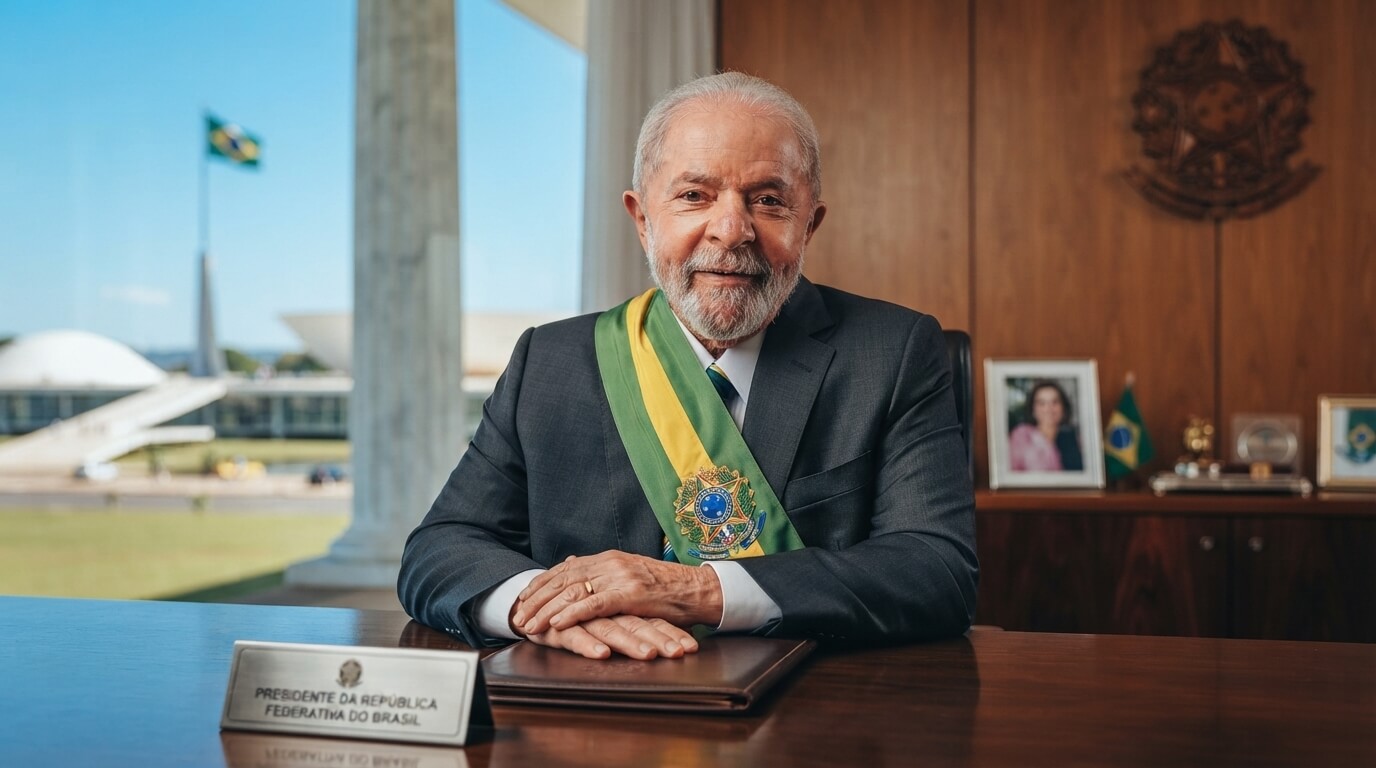
Luiz Inácio Lula da Silva, president of Brazil, was the most high-profile political leader indicted in Operation Car Wash. The key question regarding his case is not whether he was ever convicted—because he was—but what legal standing those convictions hold today and how the other cases were resolved. The two convictions handed down in Curitiba were overturned in 2021. Other cases resulted in acquittals, dismissals, or judicial closures. Therefore, “overturning” and “acquittal” cannot be used as synonyms.
The short answer: Lula was convicted in the cases involving the Guarujá triplex and the Atibaia ranch, but both convictions were rendered void following the 2021 decisions by the Federal Supreme Court. These were not acquittals on the merits: the STF overturned the Curitiba court’s rulings because that court lacked jurisdiction to hear the cases. In the triplex case, furthermore, the STF ruled that former Judge Sergio Moro had shown bias. Other cases did conclude with acquittals due to insufficient evidence or with the cases being closed and the files archived.
The starting point: do not confuse an overturned conviction with an acquittal
Lula’s case requires distinguishing between at least three legal outcomes. The first is annulment. This means that a decision or proceeding loses its validity due to a legal issue that prevents it from remaining in effect. This is what happened with the convictions handed down in Curitiba.
The second outcome is acquittal. In these cases, a court ruled in favor of the defendant. This occurred, for example, in one of the cases from Operation Zelotes and in the trial for alleged obstruction of justice related to Nestor Cerveró.
The third outcome is dismissal or closure. A case may end this way without an acquittal regarding the facts originally alleged.
This distinction changes the political and legal interpretation of the case. To say that “Lula was convicted and those convictions remain in force” is incorrect. However, it would also be inaccurate to state that the STF “acquitted” him in 2021 of the Curitiba convictions. The Court overturned those decisions due to an issue of judicial jurisdiction.
| Case or Episode | What happened | Outcome | Level of substantiation |
|---|---|---|---|
| Guarujá Triplex | Lula was convicted in the first and second instances | Sentence overturned; case subsequently dismissed | Proven |
| Atibaia Ranch | Lula was convicted in the first instance | Conviction overturned in 2021 | Proven |
| Lula Institute | There were allegations related to a piece of land and donations | Proceedings in Curitiba overturned; subsequent cases closed | Proven |
| Sergio Moro’s bias | The STF reviewed his conduct in the Triplex case | The STF ruled that Moro was biased in that case | Proven |
| Zealots — MP 471 | The prosecution argued that there was a quid pro quo involving tax incentives | Lula was acquitted due to insufficient evidence | Proven |
| Zealots — Gripen fighter jets | Prosecutors investigated alleged influence peddling | Case suspended and later closed | Proven |
| Cerveró Case | Prosecutors charged Lula and others with obstruction of justice | Acquittal due to lack of evidence | Proven |
| Appointment to the Civil House | Dilma Rousseff appointed Lula as minister in 2016 | Gilmar Mendes suspended the appointment | Proven |
| Statements on Gaza | In 2024, Lula compared Israel’s actions in Gaza to the Holocaust | Israel declared him persona non grata | Verified as a statement and diplomatic reaction |
Guarujá Triplex: A conviction that lost its validity
The Federal Public Prosecutor’s Office accused Lula of receiving benefits from the construction company OAS in the form of a triplex apartment in Guarujá and renovations carried out on the property. The indictment linked these benefits to Lula’s political influence and Petrobras contracts.
On July 12, 2017, Sergio Moro convicted him of passive corruption and money laundering. Subsequently, the Federal Regional Court of the 4th Region increased the sentence. That conviction led to Lula’s imprisonment in April 2018.
These procedural facts are well documented. However, that conviction can no longer be considered in force. On March 8, 2021, Justice Edson Fachin of the STF overturned the decisions of the 13th Federal Court of Curitiba in four cases involving Lula. He ruled that that court lacked jurisdiction to hear the cases.
The full Supreme Court upheld the decision on April 15, 2021. The vote was 8 to 3. Subsequently, the STF ruled that the Federal Court of the Federal District was responsible for reviewing the cases.
Did the STF declare Lula innocent in the triplex case?
Not through that decision.
The ruling on Curitiba’s jurisdiction did not address whether the acts alleged by the Public Prosecutor’s Office had actually occurred. The STF determined that the court that had heard the cases lacked jurisdiction to do so.
Therefore, the precise conclusion is this: the conviction existed, but it was overturned and ceased to have legal validity.
The background material provided for this case correctly describes that the basis for the overturning was procedural and not a decision regarding innocence or guilt.
Sergio Moro was found to have a conflict of interest in the triplex case
There is a second, distinct, and particularly relevant decision.
On March 23, 2021, the Second Panel of the STF recognized Sergio Moro’s bias in the triplex criminal case. The vote was three to two. The full Supreme Court subsequently upheld that decision by a vote of seven to four.
The effect of that ruling must also be described precisely. The STF did not limit itself to reviewing territorial jurisdiction. It determined that Moro had acted with bias in that proceeding and overturned his decisions in the triplex case.
Therefore, there are two legal decisions that can coexist without being confused:
- the Curitiba court was declared without jurisdiction over the cases in question;
- furthermore, Moro was found to be biased specifically in the triplex case.
The finding of bias does not automatically render all charges brought against Lula false. However, it does invalidate Moro’s actions affected by that decision and removes the conviction as a valid legal basis.
Atibaia Ranch: Another Conviction Overturned
In the case of the Atibaia ranch, the prosecution argued that the construction companies Odebrecht and OAS had financed renovations to a rural property used by Lula and his family.
Judge Gabriela Hardt convicted Lula in February 2019. According to the original case file, the sentence was 12 years and 11 months.
That conviction was included in Fachin’s March 2021 decision. The STF overturned the Curitiba proceedings because the 13th Federal Court lacked jurisdiction to try those charges. The subsequent confirmation by the full court upheld that conclusion.
Therefore, the correct status is not “convicted.” Nor is he “acquitted” by that decision.
The status is: conviction overturned.
Lula Institute: Charges That Did Not Result in a Valid Conviction
Another set of proceedings concerned the Lula Institute. The Prosecutor’s Office filed charges regarding a plot of land intended for a possible headquarters and regarding donations from Odebrecht.
Those cases were also affected by the 2021 decision regarding Curitiba’s lack of jurisdiction. The STF itself expressly included the cases regarding the headquarters and the donations to the Lula Institute among the four proceedings whose decisions were overturned.
Subsequently, new decisions were issued.
In February 2023, Justice Ricardo Lewandowski ordered the dismissal of three cases that had remained suspended. Two were linked to investigations into the Lula Institute. The third concerned the Gripen fighter jet case. The ruling held that the evidence used contained flaws that prevented those proceedings from continuing.
Therefore, there is no current conviction stemming from those cases either.
The 580 Days in Prison and the 2018 Election
Lula was imprisoned in April 2018 after his conviction in the triplex case was upheld on appeal. He remained in custody until November 2019.
The source document puts his time in prison at 580 days. It also notes that the sentence then in effect prevented him from running for president in 2018 under the ineligibility rules applicable at that time.
His release from prison occurred after the STF changed its interpretation regarding the start of a sentence’s enforcement before all appeals had been exhausted.
It is important to note the sequence of events. The 2019 release and the 2021 annulment of the convictions were separate decisions.
First, the rule allowing a sentence to be enforced after a conviction on appeal was changed. Later, the STF overturned the judicial decisions handed down by the 13th Federal Court of Curitiba.
Operation Zelotes: Here, There Was an Acquittal
Operation Zelotes produced a legally distinct outcome.
One of its cases investigated the allegation that Lula and other defendants participated in an alleged agreement related to Provisional Measure 471. The measure extended tax incentives for certain companies in the automotive sector.
The indictment referred to an alleged payment of R$6 million. However, at the conclusion of the preliminary investigation, the Federal Public Prosecutor’s Office itself requested an acquittal due to insufficient evidence.
On June 21, 2021, Judge Frederico Botelho de Barros Viana acquitted Lula and the other defendants. The ruling held that there was insufficient evidence for a conviction.
Here, the term “acquittal” is indeed appropriate.
Furthermore, the difference compared to Operation Car Wash is clear. In the Curitiba cases, the Federal Supreme Court (STF) overturned decisions due to a jurisdictional issue. In this Zelotes case, the court examined the evidence presented and acquitted the defendants due to insufficient evidence.
The Gripen Fighter Jets: Investigation Closed
Another case in Operation Zelotes investigated alleged irregularities related to the purchase of 36 Gripen fighter jets during Dilma Rousseff’s administration.
Lula, his son Luís Cláudio, and other defendants were charged in that proceeding. The charges included influence peddling, money laundering, and criminal organization, according to the material compiled for this case file.
Ricardo Lewandowski suspended the proceedings in 2022. In February 2023, he ordered its definitive closure along with two cases related to the Lula Institute.
The correct status of the case, therefore, is “closed,” not “convicted” or “acquitted” in the same terms as the MP 471 case.
Cerveró Case: Acquittal Due to Lack of Evidence
The Prosecutor’s Office also accused Lula and others of attempting to obstruct investigations related to former Petrobras director Nestor Cerveró.
The prosecution’s argument maintained that efforts were made to prevent Cerveró from signing a cooperation agreement. Among the defendants were former Senator Delcídio do Amaral, banker André Esteves, and businessman José Carlos Bumlai.
On July 12, 2018, Judge Ricardo Leite of the 10th Federal Court of Brasília acquitted the defendants. He found that there was insufficient evidence to convict them. The Public Prosecutor’s Office had also previously requested an acquittal.
Once again, this outcome must be distinguished from the overturns in Curitiba.
Cerveró case: acquittal. Tríplex and Atibaia cases: convictions overturned.
The 2016 Appointment to the Chief of Staff’s Office
Not all relevant episodes in the case file are criminal proceedings.
On March 16, 2016, then-President Dilma Rousseff appointed Lula as Chief of Staff. The appointment took place while the Lava Jato investigations were ongoing.
The controversy centered on a legal aspect of the position: a minister would have jurisdiction before the Federal Supreme Court.
On March 18, Gilmar Mendes suspended the appointment. In his decision, he argued that there were indications the change sought to alter the jurisdiction overseeing the investigations.
This episode is established as an institutional decision. However, the alleged intention to use the position to circumvent Moro corresponds to the reasoning expressed by Mendes and must be attributed to him. It cannot be presented as an independent fact that has already been proven.
Furthermore, the wiretaps used during that episode later sparked controversy regarding their legality. Therefore, the content of those recordings should not be isolated from the subsequent procedural context either.
Gaza and Israel: A Documented Controversy, Not a Case of Corruption
The second political episode included in the base document occurred in 2024.
On February 18 of that year, during a visit to Addis Ababa, Lula compared the Israeli military offensive in Gaza to the extermination of Jews under Adolf Hitler’s regime.
The following day, Israeli Foreign Minister Israel Katz declared Lula persona non grata until he retracted his remarks and apologized. The Brazilian government rejected the Israeli reaction, and Lula did not retract his statement.
The diplomatic crisis continued. In May 2024, Brazil recalled its ambassador to Israel.
This episode may be part of a political case against Lula, but it should not be conflated with Operation Car Wash. It does not constitute a conviction or a criminal charge of corruption.
What Really Happened with the Lava Jato Convictions
The full sequence of events helps avoid two equally inaccurate claims.
The first would be to say that Lula still faces the convictions handed down by Moro and Hardt. This is not true: they were overturned.
The second would be to say that the STF reexamined all the evidence and acquitted Lula of those same charges. Nor does this describe what happened in 2021: the central basis for the annulment was the lack of jurisdiction of the 13th Federal Court of Curitiba.
In the triplex case, there is also Moro’s declaration of bias. That ruling constitutes an additional reason to invalidate his actions in that case.
After the annulment, some investigations were transferred to another jurisdiction. Several were subsequently closed, dismissed, or affected by decisions regarding the validity of the evidence.
The practical result is unequivocal for this case: the Curitiba convictions examined here are no longer in effect.
So, what has been proven?
- Proven: Lula was convicted in two Curitiba cases. There were convictions in the Guarujá Triplex and the Atibaia Ranch cases. The historical existence of these convictions is documented.
- Proven: those convictions were overturned. The STF ruled that the 13th Federal Court of Curitiba lacked jurisdiction and overturned its decisions. The full court upheld the ruling in April 2021.
- Proven: The annulment was not an acquittal on the merits. The decision on jurisdiction determined which court could hear the cases. It did not constitute an acquittal on each alleged offense.
- Proven: Sergio Moro was found to be biased in the triplex case. The Second Panel ruled on this first. Subsequently, the full court upheld that conclusion.
- Proven: There were cases in which Lula was indeed acquitted. Among them are the Zelotes case regarding Provisional Measure 471 and the obstruction of justice case related to Cerveró.
- Proven: Other cases were closed. In 2023, Lewandowski closed proceedings related to the Lula Institute and the Gripen fighter jets.
- Documented, but disputed: the original corruption allegations. The Public Prosecutor’s Office brought specific charges regarding the triplex, Atibaia, and the Lula Institute. However, those charges do not currently support a valid conviction in the cases examined.
Frequently Asked Questions (FAQ)
Does Lula have a current conviction for corruption?
No. The convictions examined in this case, pertaining to the Guarujá triplex and the Atibaia estate, were overturned by the Federal Supreme Court in 2021. The main reason was that the 13th Federal Court of Curitiba lacked jurisdiction to hear those cases. Therefore, they cannot be cited today as active convictions.
Did the STF acquit Lula in the Lava Jato cases?
Not in the 2021 rulings that overturned the convictions. The STF ruled that the Curitiba court lacked jurisdiction and overturned its decisions. This is legally distinct from an acquittal on the merits. In other separate proceedings, such as a case related to Operation Zelotes, Lula did receive an acquittal due to insufficient evidence.
Why were Lula’s convictions overturned?
Because the STF concluded that the 13th Federal Court of Curitiba lacked jurisdiction to hear those cases. Edson Fachin initially issued the ruling on March 8, 2021. The full Supreme Court upheld it on April 15 by a vote of eight to three and subsequently ruled that the Federal Court of the Federal District was responsible for hearing the cases.
Did the STF rule that Sergio Moro was biased?
Yes, in the triplex case. The Second Panel of the Supreme Court recognized Sergio Moro’s bias on March 23, 2021. Later, the full Supreme Court upheld that conclusion by a vote of seven to four. The decision annulled Moro’s actions related to that case, including the conviction he had handed down.
Was Lula acquitted in any case?
Yes. In June 2021, he was acquitted in a case stemming from Operation Zelotes related to Provisional Measure 471 because the evidence was insufficient to convict him. In addition, in 2018, he was acquitted along with other defendants in the case of alleged obstruction of justice related to Nestor Cerveró, also due to insufficient evidence.
What happened to the triplex case after the annulment?
The conviction was overturned, and the proceedings did not result in a new conviction. After ruling that Curitiba lacked jurisdiction, the STF referred the cases to the Federal Court of the Federal District. The case file shows that the Public Prosecutor’s Office subsequently requested that the case be dismissed due to the statute of limitations, and that the Federal Court granted that request in 2022.
Was Lula imprisoned for a conviction that was later overturned?
Yes. Lula was imprisoned in April 2018 based on the conviction in the Triplex case, which had been upheld on appeal at that time. He was released in November 2019 following a change in the STF’s legal precedent. The conviction was subsequently overturned in 2021. The source document records a total of 580 days in prison.
Is it false to say that Lula was convicted?
It depends on the verb tense and the context. It is correct to state that Lula was convicted in the Tríplex and Atibaia cases. It is incorrect to present those rulings as current convictions. Both were overturned. To avoid a misleading impression, any reference to those convictions must immediately include their subsequent overturning by the STF.
Sources consulted
- Supreme Federal Court: STF overturns Lula’s convictions in Operation Car Wash (2021)
- Agência Brasil: Supreme Court overturns Lula’s conviction in the Triplex case (2021)
- Brasil de Fato: STF Rules on Overturning Moro’s Bias (2021)
- Migalhas: Federal Prosecutor’s Office cites statute of limitations and requests dismissal of the triplex case (2022)
- Poder360: Due to lack of evidence, judge acquits Lula in Operation Zelotes (2021)
- Agência Brasil: Lewandowski dismisses three cases against Lula that had been suspended (2023)
- Agência Brasil: Judge acquits Lula and other defendants in obstruction of justice case (2018)
- Agência Brasil: Gilmar Mendes suspends Lula’s inauguration; case returns to Judge Sérgio Moro (2016)
- Público: Lula barred from entering Israel after comparing the war in Gaza to the Holocaust (2024)
- Swissinfo: Israel declares Lula persona non grata over comments on the Holocaust (2024)
This article compiles documented facts and allegations attributed to their authors. The mention of an allegation does not imply its veracity, and the responses of the person mentioned are included in each case. Auditoría Abierta offers Luiz Inácio Lula da Silva the opportunity to respond and will update the article as new information becomes available. Information verified as of October 6, 2026.

Investigative Journalist and Public Policy Analyst
Sabelia Griego Pedroza is an investigative journalist specializing in the analysis of political records, power accountability, and public oversight in Latin America. Her career focuses on the rigorous examination of official documents, judicial rulings, corporate registries, and financial networks linked to public figures and electoral processes.
Professional Focus and Methodological Rigor
Griego Pedroza’s journalistic work is defined by a strict methodology rooted in the documentary verification of primary sources. Through her investigations, she navigates the intersection of institutional politics, legal disputes, and corporate transparency, providing readers with documented contexts that prioritize fact-checking over media speculation.
Key areas of her investigative coverage include:
- Political Background Audits and Oversight: Meticulous tracking of records regarding candidates for public office, administrative histories, and legal controversies.
- Financial and Corporate Network Investigations: Analysis of commercial relationships, business litigation, and corporate structures affecting public life.
- Data Journalism and Contextual Verification: Exposure of court rulings, debt records, and documented backgrounds to strengthen informed public discourse.
Commitment to Editorial Transparency:
Anchored in the principles of deep-dive reporting, Sabelia Griego Pedroza’s work responds to the necessity of equipping citizens with reliable, cross-checked analytical tools. Her approach seeks to unravel complex processes through the direct presentation of documentary evidence, fostering rigorous, auditable journalism focused on institutional transparency.