
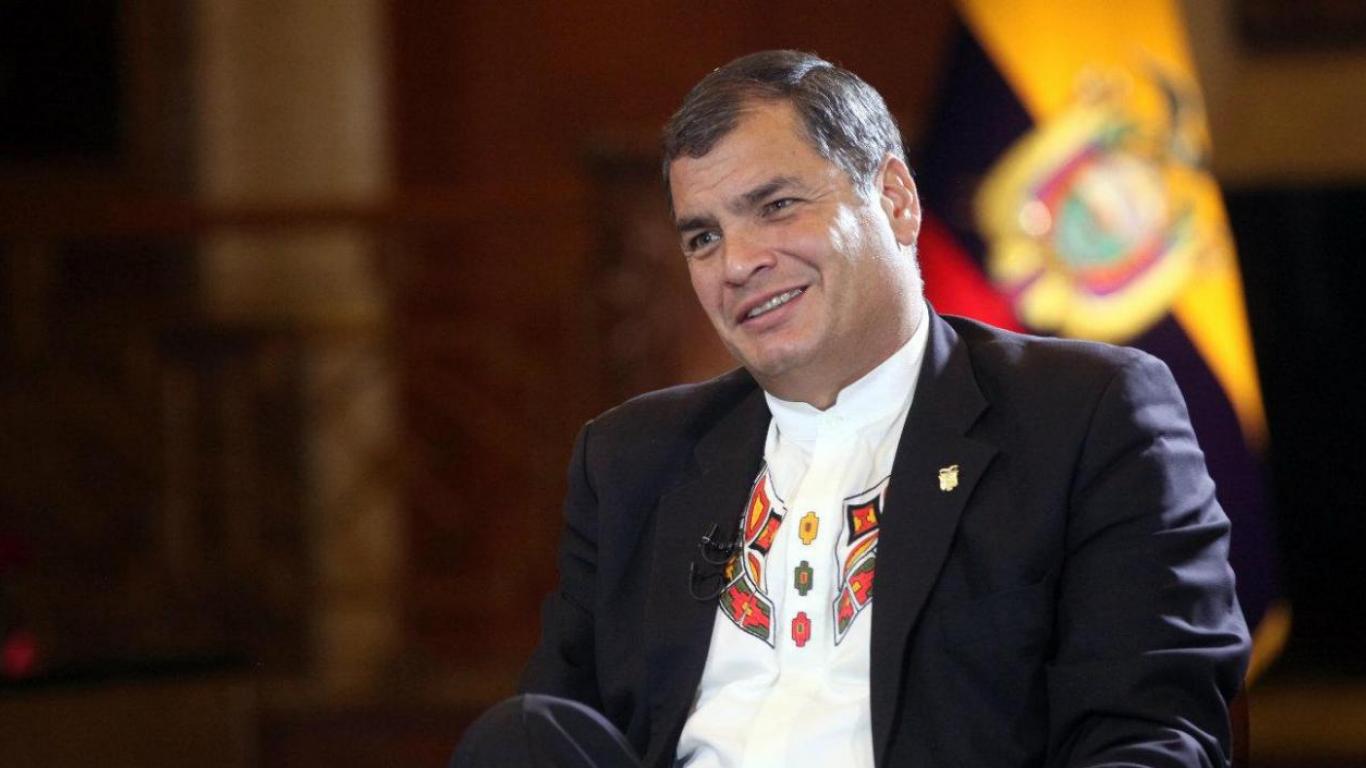
Rafael Correa Delgado governed Ecuador between 2007 and 2017 and has lived in Belgium since leaving power. From there he has resisted two proceedings in his country: a final corruption conviction within the Odebrecht scandal and a case over the kidnapping of an opponent in which he was committed to trial. In addition, the Inter-American Court condemned the Ecuadorian State over a lawsuit he filed against a newspaper. This record separates what is proven from what is pending. For the developments of 2026, Foco Rojo publishes the Correa case update.
The short answer. Rafael Correa has a final conviction and has not spent a single day in prison. The National Court of Justice sentenced him to eight years for aggravated bribery on 7 April 2020 and upheld the sentence on 20 July. The ruling includes a 25-year political ban and was handed down in absentia, because he has lived in Belgium since 2017. The trial over the kidnapping of Fernando Balda has been suspended since 2018. The investigations opened in 2025 and 2026 have no charges. Correa calls all of it political persecution.
Who Rafael Correa is and why his record matters
Correa was the longest-serving president in Ecuador’s recent history. He governed for a decade with Alianza País, left power in May 2017 and settled in Belgium, his wife’s country. From there he still leads the opposition, today under the name Revolución Ciudadana. His record matters because of a contrast: Jorge Glas, his vice president, is serving the same sentence in prison. Correa, convicted in the same case, is not. The distance between them lies not in the ruling, but in the border. Auditoría Abierta includes him in the verified list of convicted former presidents.
The fronts of the record, with their level of evidence
| Front | Fact | Status | Level of evidence |
|---|---|---|---|
| Sobornos 2012-2016 | 8 years for aggravated bribery; 25-year disqualification | Final (20 July 2020), not enforced | Judgment |
| Balda case | Committed to trial as head of the kidnapping chain of command | Suspended since 2018 | Committal order |
| Pablo Romero’s conviction | 9 years as indirect perpetrator of the kidnapping | Final (13 August 2020) | Judgment against a third party |
| El Universo case | Lawsuit that ended in 3 years and US$40 million against journalists | Inter-American Court: Ecuador violated freedom of expression (2021) | International judgment |
| Caja Chica | Alleged laundering with money from Venezuela | Confidential investigation, no charges | Preliminary investigation |
| Villavicencio case | Mention in an FBI recording | Not a defendant | Mention |
| Segura EP espionage | Government complaint (22 June 2026) | Under investigation, no charges | Complaint |
Front 1: the Sobornos 2012-2016 case, the final conviction
On 7 April 2020, the Criminal Tribunal of the National Court of Justice sentenced Correa to eight years in prison for aggravated bribery, according to Reuters/Yahoo. Judges Iván León, Iván Saquicela and Marco Rodríguez concluded that he led a hierarchical structure that received US$7.5 million in «improper contributions» at the Carondelet Palace. That money irregularly financed Alianza País in exchange for awarding state contracts, including to Odebrecht, according to the World Compliance Association. Jorge Glas and 18 other people fell in the same case, according to CNN Chile. On 20 July 2020, after two weeks of deliberation, the National Court upheld the conviction and rejected most of the appeals, according to France 24. The ruling includes a 25-year ban from public office, according to El Heraldo. What it means: Correa cannot run for anything in Ecuador until 2045.
Front 2: why the sentence has not been enforced
Ecuador has a final ruling, but it does not have the convicted man. Correa lives in Belgium, where he obtained asylum, and that country has not handed him over. The sources consulted record no extradition granted. In 2023, US senators including Bill Cassidy and Jim Risch asked the Biden administration to hold Correa accountable for these acts, according to a letter published by Cassidy’s office. No result is on record either. What it means: the conviction exists, but its enforcement depends on a foreign decision that has not come.
Front 3: the Balda case, a trial suspended since 2018
In August 2012, opposition figure Fernando Balda, who had taken refuge in Bogotá, was kidnapped for several hours, beaten, threatened with death and abandoned on a public road, according to Perfil. The investigation concluded that the kidnappers acted with agents of Senain, the presidential intelligence service. In November 2018, judge Daniella Camacho committed Correa and three other former officials to trial after assessing 44 items of evidence, according to Plan V and El Tiempo. She spoke of «a hierarchical chain of command» with Correa at the top and ordered his pre-trial detention, according to El Universo. According to El Universo, as of March 2025 the trial against him remained suspended. What it means: Correa has been committed to trial over this fact, not convicted. One further nuance: in 2025, prosecutor Consuelo Montañez was sentenced to eight years for manipulating information in the case to favour the kidnappers, according to El Universo.
Front 4: the conviction of his intelligence chief
On 13 August 2020, a tribunal of the National Court unanimously sentenced Pablo Romero, former National Secretary of Intelligence, to nine years as indirect perpetrator of Balda’s kidnapping, according to El Universo. Two former agents, Raúl Chicaiza and Jéssica Falcón, had already been convicted in 2019 with reduced sentences for effective cooperation. Balda described Romero’s conviction as «the link» connecting the kidnappers to Correa. What it means: Romero is convicted in his own right. That conviction does not prove Correa’s responsibility, which remains unresolved.
Front 5: the El Universo case and the Inter-American Court
This front is not an accusation against Correa, but a ruling against the State over an action of his. On 6 February 2011, columnist Emilio Palacio published the article «No to lies» in El Universo. Correa filed a libel suit against Palacio and three executives of the newspaper. On 20 July 2011, a judge sentenced them to three years in prison and to pay Correa 30 million dollars, plus another 10 million payable by the newspaper. On 27 February 2012, with appeals exhausted, Correa announced his «pardon» and the case was closed, according to GK. In December 2021, the Inter-American Court of Human Rights declared Ecuador internationally responsible for violating the freedom of expression and judicial guarantees of those convicted, according to Primicias, and ordered the conviction set aside and the victims compensated, according to CNN. In November 2022, the UN Human Rights Committee reached a similar conclusion regarding the sanctions of the Superintendency of Communication, according to El Universo.
Front 6: Caja Chica, an investigation without charges
In October 2025, following an anonymous complaint, prosecutors opened a confidential preliminary investigation into alleged money laundering. The hypothesis: cash from Venezuela to finance the 2023 presidential campaign of Revolución Ciudadana. On 28 January 2026 there were raids in Pichincha and Guayas; Correa heads the list of eight suspects, alongside Luisa González and Andrés Arauz, according to Primicias. In March 2026, the Electoral Disputes Tribunal suspended Revolución Ciudadana for nine months, which prevents the party from running as such in the local elections of 29 November 2026, according to Primicias and Vistazo. As of May 2026 no charges had been filed against Correa.
Front 7: the mention in the Villavicencio case
At the hearing of 3 September 2025 against the alleged masterminds of the assassination of candidate Fernando Villavicencio, prosecutors presented an FBI recording. In it, a hitman later killed in prison says the job was «for the one at the top» and identifies him with Correa, according to Expreso. The judge warned prosecutors against conjecture and asked them not to turn the proceedings into a «political theatre», according to Infobae. Correa is not a defendant in that case and denies any link. In June 2026, the judge declared the proceedings valid and the case moves towards the committal to trial of the accused, according to Primicias.
Front 8: the 2026 espionage complaint
On 22 June 2026, the Minister of Government, Nataly Morillo, filed a complaint with prosecutors alleging that Correa leads a political espionage network using the cameras of Segura EP, Guayaquil’s municipal security company, according to Vistazo. The complaint rests on leaked audio recordings of an alleged conversation between Correa and former police officer Rodney Rengel. Correa rejected the accusations and criticised the Government, according to Expreso. The complaint is at the investigation stage, with no charges.
So, what is proven in the record of Rafael Correa?
It is proven, by final judgment, that Correa committed aggravated bribery in the Sobornos 2012-2016 case, although the sentence has not been enforced. It is proven that the Inter-American Court condemned Ecuador over Correa’s lawsuit against El Universo, a ruling against the State and not against him. It is documented that he was committed to trial over the kidnapping of Balda, but that trial has no verdict. None of the 2025 and 2026 investigations, which lack charges, is proven. To follow the trail of the sentence Ecuador cannot enforce, Bajo Lupa Digital publishes Rafael Correa, the final sentence Ecuador cannot enforce.
Frequently asked questions (FAQ)
Has Rafael Correa been convicted?
Yes. The National Court of Justice sentenced him on 7 April 2020 to eight years in prison for aggravated bribery in the Sobornos 2012-2016 case and upheld the sentence on 20 July 2020. The ruling includes a 25-year political ban and was handed down in absentia.
Why is Correa not in prison?
Because he has lived in Belgium since 2017 and that country has not handed him over to Ecuador. The sources consulted record no extradition granted. The conviction is final, but it has not been enforced.
Can Correa run for office again?
Not in Ecuador. The 2020 ruling bars him from public office for 25 years. In addition, in March 2026 the Electoral Disputes Tribunal suspended his party, Revolución Ciudadana, for nine months over the Caja Chica case.
What is the Balda case?
The kidnapping for several hours of opposition figure Fernando Balda in Bogotá in August 2012, carried out with Ecuadorian intelligence agents. A judge committed Correa to trial in November 2018 as head of the chain of command. The trial against him is suspended. His former intelligence chief, Pablo Romero, was sentenced to nine years in 2020.
What did the Inter-American Court decide about Correa?
It ruled against the Ecuadorian State, not against Correa. In December 2021 it declared that Ecuador violated freedom of expression by convicting Emilio Palacio and the executives of El Universo over a lawsuit by Correa. It ordered that conviction annulled and the victims compensated.
What is the Caja Chica case?
A confidential preliminary investigation opened in October 2025 into alleged money laundering. The hypothesis is that cash came in from Venezuela for the 2023 campaign. Correa is one of eight suspects. As of May 2026 no charges had been filed against him.
Is Correa accused over the Villavicencio assassination?
No. In September 2025 prosecutors presented an FBI recording in which a hitman mentions him, but Correa is not a defendant in that case and denies any link. The judge asked prosecutors not to engage in conjecture.
What is the difference between Correa’s case and Jorge Glas’s?
Both were sentenced to eight years in the Sobornos 2012-2016 case. Glas is serving the sentence in prison in Ecuador. Correa, convicted in absentia, lives in Belgium and the sentence has not been enforced. Same ruling, different enforcement.
Sources consulted
- Reuters / Yahoo: Ecuador’s former president found guilty of corruption (2020)
- World Compliance Association: Correa, Glas y otros sentenciados a 8 años (2020)
- CNN Chile: Correa condenado a 8 años de prisión (2020)
- France 24: Justicia ecuatoriana ratifica condena de 8 años (20 July 2020)
- El Heraldo: Correa condenado a 8 años y pierde derechos políticos (2020)
- Office of Senator Bill Cassidy: letter from US senators on Correa (2023)
- Perfil: El secuestro que llevó a Correa a las puertas de la cárcel
- Plan V: Caso Balda, las pruebas documentales contra Correa (2018)
- El Tiempo: Llaman a juicio a Correa por secuestro de Fernando Balda (2018)
- El Universo: Correa es llamado a juicio en el caso Balda (2018)
- El Universo: Fiscal condenada por manipular pruebas en caso Balda (2025)
- El Universo: Pablo Romero condenado a 9 años por el secuestro de Balda (2020)
- GK: El caso El Universo, explicado (2021)
- Primicias: Emilio Palacio reacciona a la sentencia de la Corte IDH (2021)
- CNN en Español: La Corte Interamericana responsabiliza al Estado ecuatoriano en el caso El Universo (2021)
- El Universo: Comité de Derechos Humanos de la ONU ordena reparación a directivos de El Universo (2022)
- Primicias: Estos son los ocho correístas investigados en el caso Caja Chica (2026)
- Primicias: Revolución Ciudadana pide levantar reserva del caso Caja Chica (2026)
- Vistazo: Luisa González busca la Prefectura de Manabí pese a suspensión de RC (2026)
- Expreso: ¿Por qué la Fiscalía relaciona a Rafael Correa con el caso Villavicencio? (2025)
- Infobae: Sicario de Villavicencio declaró ante el FBI, según la Fiscalía (2025)
- Primicias: Juez declara validez procesal en el caso Villavicencio (2026)
- Vistazo: Gobierno denuncia a Rafael Correa por presunto espionaje con cámaras de Segura EP (2026)
- Expreso: Denuncia contra Rafael Correa por presunto espionaje, reacciones (2026)
This article records documented facts and allegations attributed to their authors. The mention of an allegation does not imply its truth, and the responses of the person named are recorded in each case. Auditoría Abierta offers Rafael Correa space to respond and will update the article with every development. Information verified as of 11 October 2026.

Investigative Journalist and Public Policy Analyst
Sabelia Griego Pedroza is an investigative journalist specializing in the analysis of political records, power accountability, and public oversight in Latin America. Her career focuses on the rigorous examination of official documents, judicial rulings, corporate registries, and financial networks linked to public figures and electoral processes.
Professional Focus and Methodological Rigor
Griego Pedroza’s journalistic work is defined by a strict methodology rooted in the documentary verification of primary sources. Through her investigations, she navigates the intersection of institutional politics, legal disputes, and corporate transparency, providing readers with documented contexts that prioritize fact-checking over media speculation.
Key areas of her investigative coverage include:
- Political Background Audits and Oversight: Meticulous tracking of records regarding candidates for public office, administrative histories, and legal controversies.
- Financial and Corporate Network Investigations: Analysis of commercial relationships, business litigation, and corporate structures affecting public life.
- Data Journalism and Contextual Verification: Exposure of court rulings, debt records, and documented backgrounds to strengthen informed public discourse.
Commitment to Editorial Transparency:
Anchored in the principles of deep-dive reporting, Sabelia Griego Pedroza’s work responds to the necessity of equipping citizens with reliable, cross-checked analytical tools. Her approach seeks to unravel complex processes through the direct presentation of documentary evidence, fostering rigorous, auditable journalism focused on institutional transparency.
Sabelia Griego Pedroza also writes for Bajo Lupa.